
Ever sit next to someone you love, both scrolling on your phones, and realize you haven’t had a real conversation all day? You’re not alone. In a world full of digital noise, creating genuine connection can feel harder than ever. What if a simple deck of cards could change that? Therapy card games are designed to be an easy, low-pressure way to start the meaningful conversations you’ve been craving, turning silence into shared stories. Check out Alternatif JAGO189 to know more
Think about asking your teenager how school was and getting the classic, one-word answer: “fine.” Now, imagine pulling out a card that asks, “What was the funniest thing that happened today?” Suddenly, you’re hearing a real story. These aren’t about winning or losing; they’re structured social emotional learning activities that bypass common communication blocks. By providing a specific prompt, they give everyone a clear, safe way to share without the pressure of thinking of a topic from scratch.
This versatile approach isn’t just for families trying to find activities to help kids express feelings. These games are for couples looking to reconnect on date night, friends wanting to deepen their bond, and even individuals seeking a structured way to practice self-reflection. In practice, many therapists and coaches use similar tools as building rapport with clients activities, proving their power to open up dialogue. Whether for your partner, your family, or yourself, the goal is the same: to make connection feel easy again.
How Do These Games Actually Make it Easier to Talk?
Ever been in a conversation where everyone talks over each other? Many therapy card games solve this with a simple, powerful rule: you can only talk when it’s your turn. This structure instantly transforms the dynamic. Instead of just waiting for a chance to jump in, you find yourself actually listening, knowing your own time to share is protected. It immediately creates a sense of fairness and calm.
Then there’s the awkwardness of starting a deep conversation from scratch. The magic of these games lies in the prompts. A card might ask, “Share a challenge you recently overcame,” removing the pressure of inventing a meaningful topic on the spot. Unlike generic icebreaker questions, these are carefully designed to gently open the door to connection, not force it.
The game also provides a unique kind of social permission. Suddenly, it’s not you asking a sensitive question—it’s just the card’s turn. This shift makes it feel safer to explore topics that are normally off-limits. Understanding how to use therapeutic card decks is about leaning into this structure. It’s the same principle behind feelings flashcards for children; the card acts as a helpful middleman for expressing big emotions.
This blend of structure, prompts, and permission creates a conversation with guardrails. It gently guides you away from common pitfalls, like interrupting or avoiding meaningful topics entirely. By making it safer to share, these games lay the groundwork for a much deeper sense of connection.
From “You Don’t Listen” to “I Understand”: Strengthening Your Relationships, One Card at a Time
One of the most common relationship frustrations is feeling like you’re not being heard. Because these games rely on turn-taking, they quietly solve this problem. When you know you’ll get your own uninterrupted time to speak, you stop planning your rebuttal and start actually hearing what the other person is saying. It’s not a lecture on active listening; it’s a natural result of the game’s design, making it one of the most effective card games to build social skills without feeling like a lesson.
Beyond just listening, many cards are designed to actively build empathy. Imagine a prompt that asks, “Finish this sentence for your partner: You probably felt stressed today because…” Answering this requires you to step outside your own head and genuinely consider their world. This simple act of perspective-taking is a powerful tool for building rapport. You’re not just guessing; you’re practicing the art of understanding.
Conversations can easily fall into a rut, circling the same complaints about work, bills, or chores. These games help break that cycle by deliberately introducing new topics. A card asking “What’s one small thing you’re looking forward to this week?” can completely shift the energy of a room. By injecting moments of hope, gratitude, or shared dreams into your discussions, emotional intelligence games prove effective at building a more resilient and positive connection.
These moments—of truly listening, of seeing another’s perspective, of sharing something positive—aren’t just isolated events. They are the small building blocks of a stronger, more empathetic relationship. The game provides the framework, but the understanding you build is real. Of course, understanding someone is one thing, but having the right words to describe what you’re feeling or sensing is another challenge entirely.
Why “I’m Fine” Is a Dead End: Using Prompts to Build Your Emotional Vocabulary
We’ve all been there: someone asks how you are, and you say “fine” or “just tired,” because trying to explain the tangled knot of feelings in your head is too much work. This is where building your emotional vocabulary comes in—which is really just having more words than ‘sad’ or ‘mad’ to describe your inner world. Instead of a vague sense of being “off,” you might realize you’re feeling “disappointed,” “lonely,” or “overwhelmed.” Having the right word gives you clarity, and you can’t address a feeling if you can’t even name it.
This is where the cards become so powerful. Many decks include therapeutic prompts for emotional regulation that act like a gentle guide. A card might ask, “You felt a surge of negativity today. Was it closer to frustration (being blocked), anxiety (worrying about the future), or embarrassment (feeling exposed)?” This structured question helps you untangle that knot. Moving from “I had a bad day” to “I felt misunderstood in that meeting” is a huge leap in self-awareness. It’s one reason these are considered such effective cognitive behavioral therapy tools for teens learning to navigate complex emotions.
Pinpointing the exact feeling is the first step toward managing it. After all, the solution for feeling “lonely” (calling a friend) is very different from the solution for feeling “overwhelmed” (making a to-do list). It’s similar to how feelings flashcards for children teach them to identify emotions; these games help adults refine that same essential skill. Once you can name what’s going on inside, you regain a sense of control. The question then becomes, what kind of conversations do you want to start?
Finding Your Perfect Match: Which Type of Wellness Card Deck is Right for You?
The answer to “what kind of conversation do you want to start?” is the easiest way to find the right deck. You wouldn’t use a deep, romantic prompt on family game night, just as you wouldn’t ask a new partner about their five-year plan on a second date. The goal is to match the tool to the moment.
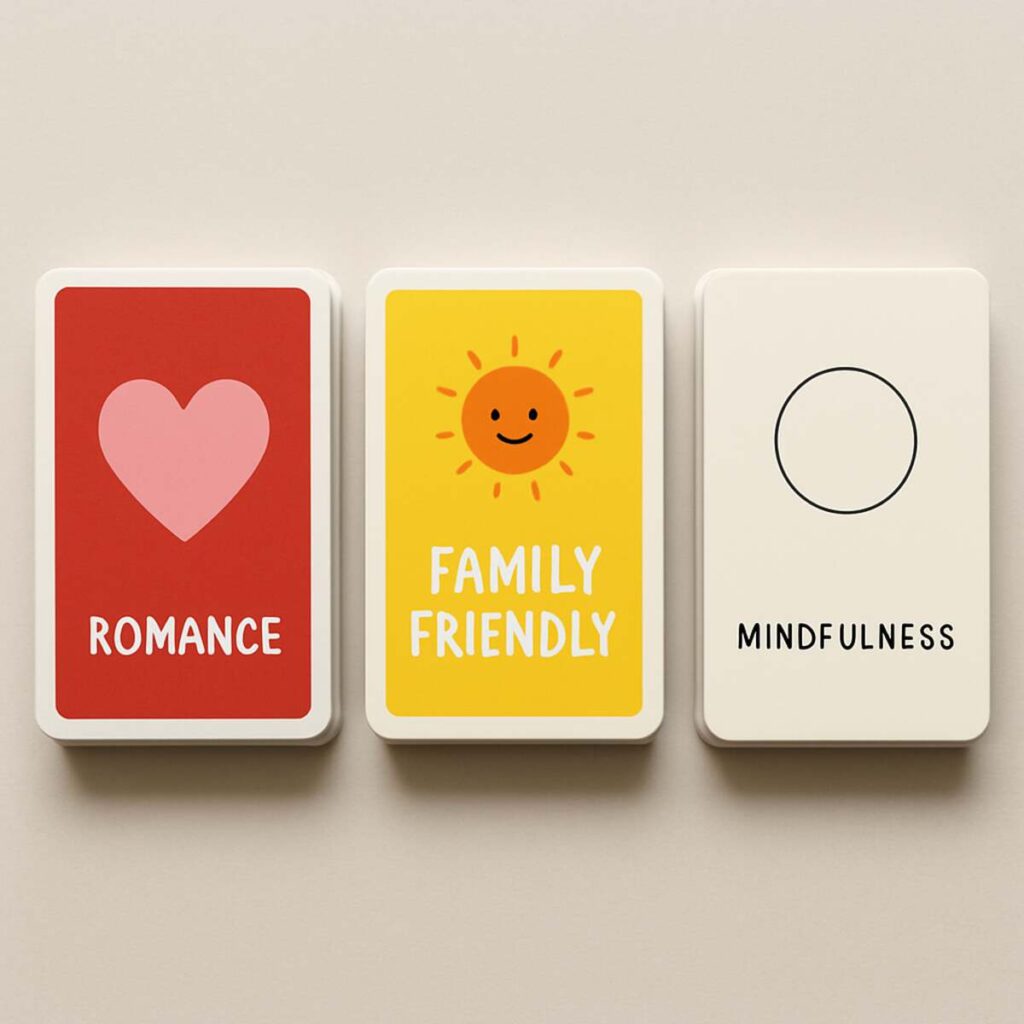
Thankfully, most wellness decks are designed with a specific purpose in mind, falling into a few common categories. When looking for a deck, consider what you hope to achieve. Are you trying to deepen an existing bond, lighten the mood and connect with your kids, or simply understand yourself a little better?
Based on your goal, you can narrow your search to one of these three main types:
- For Deeper Connection with Your Partner: These decks focus on intimacy, shared memories, and future dreams. The questions are designed to build empathy and bring you closer. Example Prompt: “What’s a small, everyday thing I do that makes you feel loved?”
- For Opening Up with Family and Friends: Geared toward lighthearted fun and storytelling, these games break the ice and get people talking without pressure. *Example Prompt: “Share a memory from a family vacation that still makes you laugh.”
- For Solo Journaling and Self-Discovery: Often called self-care decks, these are perfect for personal reflection. Many people search for a good self-care card deck review to find prompts that inspire insight and mindfulness. Example Prompt: “What is one thing you’re looking forward to this week, no matter how small?”
While these are some of the best mental wellness card decks for adults, remember the distinction between counseling games vs traditional therapy. These decks are fantastic for starting healthy conversations, but a licensed therapist is the right choice for deeper, ongoing challenges. Think of the cards as a great starting point—a way to make the first move. But how do you actually begin?
How to Start a Game Without it Being Awkward
Knowing how to use therapeutic card decks is less about rules and more about the invitation. The key is to make it feel like a curious experiment, not a confrontation. Instead of a heavy “we need to talk,” try a light, no-pressure approach: “Hey, I found this card game with some interesting questions. Want to try just a few rounds tonight after dinner?” By framing it as a small, shared activity, you make it easy for someone to say “yes.”
Next, give the game a boundary. The fear of getting trapped in a long, difficult conversation is real, so offer a clear and simple out. Saying, “Let’s just play for 15 minutes,” or “Let’s each answer three cards,” makes the entire experience feel manageable and safe. This simple container is especially effective for creating activities to help kids express feelings, as they thrive on clear expectations. It signals that this is a special time, but not an endless one.
Just as important is creating a space that honors the intention. You don’t need candles and soft music, but you do need to put the phones away. Placing devices in another room is a powerful non-verbal cue that says, “For the next few minutes, you have my full attention.” This single action eliminates distractions and turns a simple game into a moment of genuine connection, showing the other person that their answers matter.
Ultimately, the goal isn’t to solve a problem but simply to start a conversation. Think of the prompts less as a test and more like valuable icebreaker questions that open a door to new topics. Approach the game with curiosity, not an agenda. When you focus on listening and learning something new about the other person—or even yourself—the awkwardness fades, replaced by the simple act of being present together.
A Powerful Tool, Not a Replacement for Therapy
These conversation-starting games are fantastic for building connection and self-awareness, and understanding their role is crucial. Think of a therapy card game as a well-stocked first-aid kit. It’s perfect for handling everyday emotional bumps and scrapes, cleaning up small misunderstandings, and promoting healthy habits. Actual therapy with a licensed professional, on the other hand, is like seeing a doctor. You go to them for persistent pain, deeper wounds, or when you need an expert diagnosis and a personalized treatment plan.
A first-aid kit is essential, but you wouldn’t use it to set a broken bone. These games are similar. They are not designed to treat clinical conditions. It’s likely time to seek professional support if you notice signs like these:
- Your feelings are consistently disrupting your daily life (work, sleep, or relationships).
- You are trying to work through trauma, deep-seated anxiety, or depression.
- You’ve tried self-help tools, but nothing seems to make a lasting difference.
Choosing to use these games is a wonderful, proactive step toward better mental wellness. And recognizing that you or a loved one might need the dedicated guidance of a therapist isn’t a failure—it’s a sign of profound strength and self-awareness. One is a tool for maintenance, the other is a guide for healing, and both have an important place in a healthy life.
Your 3-Step Plan to Start Having Better Conversations
The secret to turning awkward silence into real connection isn’t magic—it’s structure. Where conversation once felt like a daunting, open field, these games offer a clear, guided path forward, turning surface-level chat into an opportunity for genuine connection.
Getting started is simpler than you think. Here’s a 3-step plan to move from reading to doing:
- Identify Your Goal: What are you hoping for? Deeper chats with your partner, more fun with your family, or a better understanding of yourself?
- Pick Your Category: Based on your goal, choose a deck type from the guide above that feels like the right fit for your situation.
- Make a Low-Pressure Invitation: Suggest a single, 15-minute round. Keeping it short and casual makes it easy for everyone to say “yes.”
Ultimately, therapy card games are simply invitations. They are an invitation to listen, to share, and to see the people you love—and yourself—in a new light. You don’t need a big, serious talk to build a stronger connection. Sometimes, all it takes is the right question and the willingness to play.